
Post-Pandemic Costa Rica
The anatomy of the two realities of immigration, from the strategic investor to the “perpetual tourist”. How the dynamics of expatriates have transformed in recent years and why the gap between integration and isolation risks destabilizing local communities.
When you first step foot in Costa Rica, the tropical mirage is almost instant. Social media clichés about the pura vida lifestyle, wild beaches, and absolute freedom work like a powerful magnet. However, when you look at this country through the lens of over two decades of direct experience and permanent residency, during which I have seen the local dynamics profoundly transform, the landscape loses its rose-tinted filters and takes on much more complex nuances.
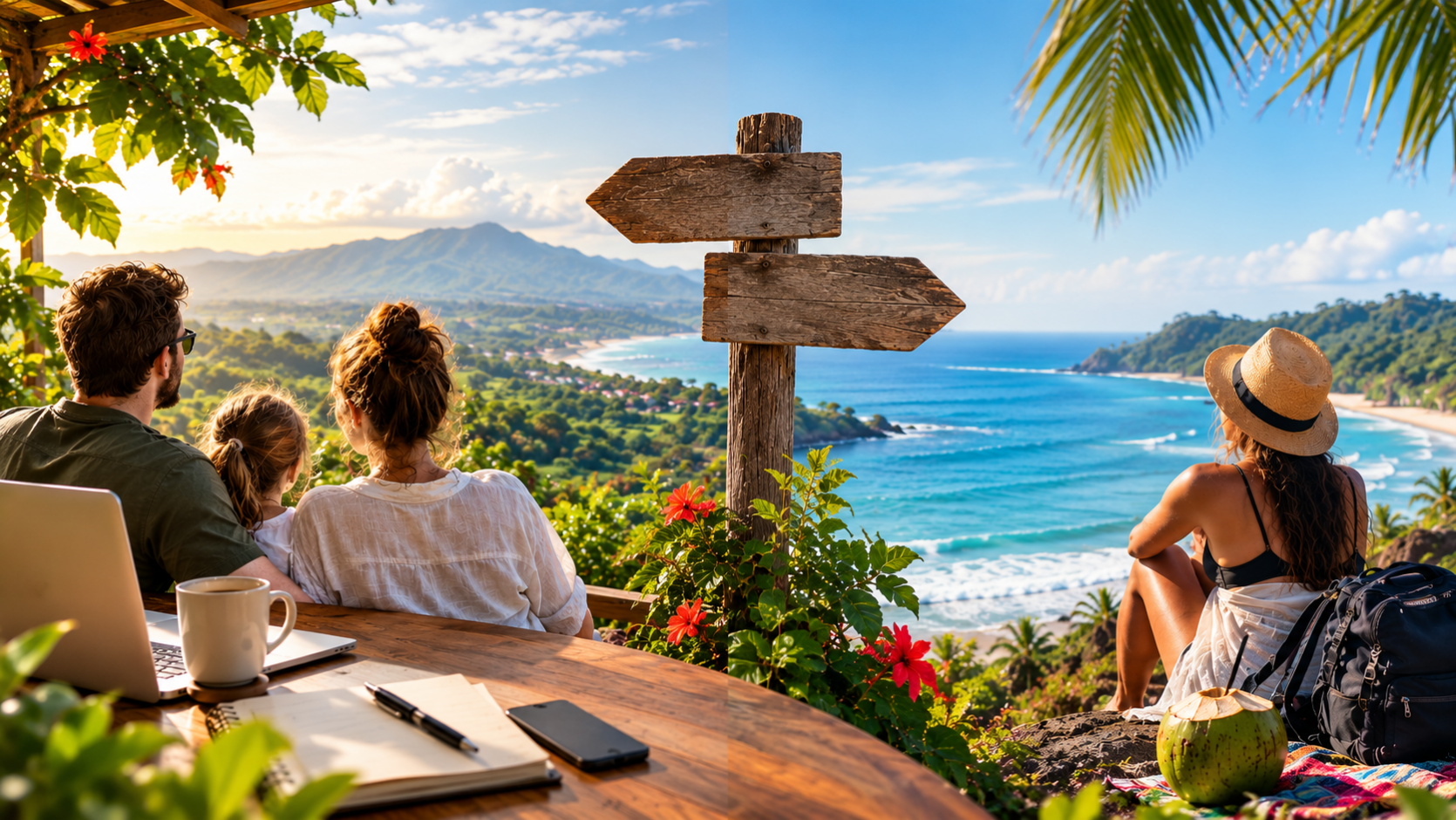
Today’s Costa Rica, the one in the second half of the 2020s, is no longer the destination that many idealize from afar. The massive migratory wave that began in the post-pandemic period brought with it a deep fracture among the foreign community. Today, we can no longer speak of “expats” as a homogeneous mass.
In reality, we are witnessing the coexistence of two completely different worlds, which share the same geographical territory, but live in diametrically opposed social, economic and legal dimensions.
- On the one hand, there is responsible immigration: families and professionals who understand that guest status implies legality, real investment, and respect for locals and state institutions.
- On the other hand, an isolated, transactional bubble has developed, made up of those trying to replicate a Western lifestyle in an exotic setting, bypassing the rules of the game.
This gap is not just a topic of debate on social media groups; it represents a harsh administrative reality that is reconfiguring the country’s immigration policies and the attitude of locals towards foreigners.
The reality of integration
Long-term investment, pragmatism and legal respect
To understand how sustainable immigration works in Costa Rica, we need to look beyond the excitement of the first few months. The Profile of the Successful Immigrant “the one who builds a peaceful life in the long term“, is defined by pragmatism, respect for the law and a deep understanding of local administrative reality.
The safe way
Investing in your own name vs. The company trap
One of the biggest mistakes that newcomers make, often misguided or ill-informed, is purchasing property through Sociedad Anónima (SA) structures. While this method was extremely popular in the past, the legislative dynamics in Costa Rica have changed radically.
The soundest legal advice for a bona fide investor is to purchase properties in their own name, on their passport; a newcomer does not yet have residency anyway, and often it is the purchase of the property itself that qualifies them for the Inversionista category. This approach eliminates a whole raft of bureaucratic and tax obligations that can quickly become a nightmare for a non-resident:
- Annual corporate tax, which if not complied with leads to heavy penalties.
- Mandatory declaration of beneficial owners (Registro de Transparencia y Beneficiarios Finales) to the Central Bank, a rigid and complex annual procedure.
- Asset taxes and the major risk of automatic dissolution of the company by the National Registry in case of non-payment, a situation in which the recovery of assets becomes a long and extremely costly legal process.
Buying in your own name, while respecting the current legal threshold of 200,000 USD reintroduced for the Inversionista category, offers total transparency before the Directorate General of Migration (DGME). The asset is protected and the link between the investment and the right to apply for residency is direct and clear.
Tico Time
Why file stagnation is not a system failure
Another element of differentiation between the two realities is the way the Costa Rican bureaucratic apparatus is perceived. While on social media groups panics about the “lack of movement” of files are the order of the day, the reality on the ground shows us that at Migra things are measured in seasons, not weeks.
It is perfectly normal for files submitted at the beginning of the year (in February or May) to not register visible movements for several months. This apparent stagnation does not mean a refusal. It is the result of a traditional bottlenecked system of bureaucracy, but also of a recent wave of applications concentrated in just a few months: on July 14, 2026, the law that allowed inclusion in the Inversionista category with a threshold of only $150,000 expired, and many applicants crowded the last few hundred meters to buy and submit the documents before the change.
For the informed investor, this waiting time is not a cause for stress. Once the file has received a number of expedients, the applicant is under the legal protection of the Costa Rican state. He can live, manage his assets and await the final resolution in complete safety, without fear of routine controls. True integration begins with accepting the fact that you are a guest in a country that follows its own procedures, at its own pace.
The reality of the isolation bubble
The myth of transactional "pura vida" and the luxury cost trap
If the first reality is defined by stability and legal respect, in the second reality, some of the post-pandemic newcomers are governed by cultural isolation and a deep misunderstanding of local economic mechanisms.
This bubble, often informally called “Yankeeland“, tends to replicate a Western lifestyle in an exotic setting, refusing assimilation and constantly complaining about the high cost of living.
The shopping cart paradox
Real prices vs. Export prices
One of the most heated debates on social media groups revolves around the claim that “Costa Rica has become a much too expensive country.” However, o rigorous analysis at the shelf shows us a much more nuanced reality, based on a behavioral error of the foreign consumer.
Those living in gated communities tend to shop exclusively at premium supermarket chains or organic tourist shops, where imported products are over-priced. For them, the cost of living seems out of control.
However, the reality of those integrated, who live among the locals (even in tourist areas like La Fortuna), is completely different. An experienced immigrant knows that the domestic economy is based on the use of local tools:
- Smart purchasing: Buying basic products from chains oriented towards affordable prices (such as Pali, Maxi Palí, Wallmart or Megasuper) or directly from local producers (neighborhood butchers, poultry farms or weekly fruit and vegetable fairs – Ferias del Agricultor).
- Differences from the shelf: While a luxury expat will argue that prices are unrealistically low in comparative analyses, the raw reality shows that a carton of average quality eggs ranges between 950 and 1,100 colones, and everyday olive oil remains perfectly competitively priced if niche brands are avoided.
- Technology in support of the economy: Unlike the transactional consumer who pays without checking, the long-term resident uses local tools to monitor and compare offers, such as the app SaveNow, managing to reduce their costs by up to 30-40% on durable goods.
Aggressive gentrification of coastal areas
The digital nomad effect
This economic disconnection, however, has a severe side effect on the host country: gentrification.. The wave of digital nomads and remote workers arriving after 2020, equipped with substantial foreign currency (USD) income, has created immense pressure on coastal areas such as Tamarindo, Nosara or Santa Teresa.
Coming with a transactional and short-term mindset, they accepted artificially inflated rents and prices, pumping capital into a speculative real estate bubble. The result? Property prices skyrocketed, and local communities of Costa Ricans (as well as older, more affluent expats) were gradually pushed out of their own cities.
The major problem with this mindset is its lack of sustainability: if fiscal conditions change, these nomads will pack up their laptops and head off to the next trendy TikTok destination, leaving behind a deeply disrupted local economy.
The "Border Run" phenomenon and tolerance... since 2026
Perhaps the most vulnerable point of this isolated bubble is the superficial legal approach. Many of the recent arrivals refuse to open a legal residency file, preferring the status of “perpetual tourist”. They practice the so-called border run, leaving the country every 3 or 6 months for a few days (to Nicaragua or Panama) just to renew the stamp on his passport.
Through this method, they avoid paying mandatory health insurance, social contributions (Caja), and related taxes, contributing nothing to the fiscal system of the country whose resources and security they consume.
However, the year 2026 brought a radical paradigm shift. The General Directorate of Migration (DGME) switched to a different tolerance policy… In the last 6 months, border filters and controls on transit routes have been massively intensified.
The authorities began to apply the law to the letter, creating “packages” of expulsion and administrative deportation for those found in an irregular situation, regardless of nationality or passport strength.
The panic on social media groups is justified: Costa Rica has stopped turning a blind eye to bureaucratic tricks, reminding everyone that crossing the border is a privilege granted by the state, not a guaranteed right.
Conclusion
The future of immigration in Costa Rica belongs to those who are responsible. The legislative changes of 2026 and the investment threshold of 200,000 USD demonstrate the authorities’ firm commitment to legality and sustainability. Respect for the legal framework and real partnership with local communities are the only guarantees for a stable existence and a fulfilled life under the sign of Pura Vida.

 Behind OpenZone are two people: a Costa Rican native with deep roots in the local history, and an expat who has been settled here for over two decades. Together, we combine native knowledge of the system with firsthand experience of the very process you’re going through right now.